Perfect for buyers who care more about Simple task tracking, lean teams, quick onboarding than generic flexibility.
Project ManagementFree planTrial available4 plans
Trello
Choose Trello if your real priority is simple task tracking, lean teams, quick onboarding. It is built for buyers who want that outcome first and do not need every product to pretend it fits every workflow.
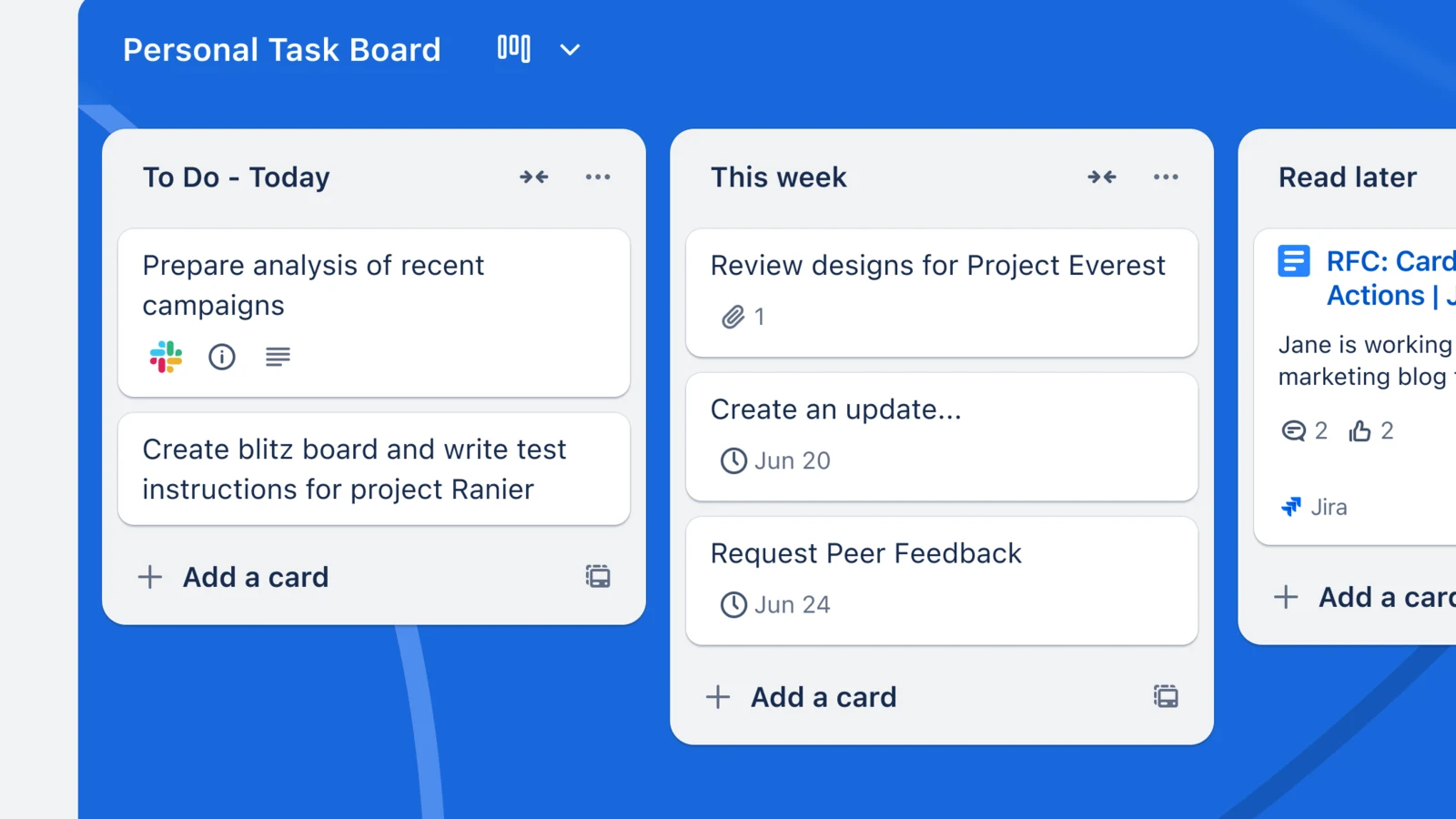
Trello provides a card-based project management experience focused on clarity and ease of use, making it effective for simple planning, coordination, and status tracking.
Starting price$5/user/month
CompanyAtlassian
PlatformsWeb, Mac, Windows, iOS, Android
Best forSimple task tracking, lean teams, quick onboarding
Skip Trello if the real priority is Flexible workflows, internal knowledge, all-in-one planning. Notion is built closer to that job.
Trello starts at $5/user/month, but the real decision is whether the paid tier unlocks the capability level you actually need.
Editorial Score
Worth evaluating
Trello has a credible case, but the buyer should pressure-test price, fit, and limitations before committing.
Flexibility7.4/10
Collaboration8.6/10
Integrations8.2/10
Value9.0/10
Our Verdict
Who should actually buy Trello?
Trello earns a place on the shortlist when the real job is Simple task tracking, lean teams, quick onboarding. If your priority is Flexible workflows, internal knowledge, all-in-one planning, Notion is the better fit.
Flexibility is the weak point, and the product's own tradeoff makes that obvious: Less flexible for documentation-heavy workflows.
Notion is the better alternative if you care more about flexibility and need Flexible workflows, internal knowledge, all-in-one planning. Asana is the better alternative if you care more about flexibility and need Cross-functional execution, structured planning, reporting.
Fast Read
What matters most before you choose Trello.
Use this section as the 30-second scan before you dive into pricing, feature depth, or comparisons.
Fast scan6 points
Start hereWho this page is really for
Perfect for buyers who care more about Simple task tracking, lean teams, quick onboarding than generic flexibility.
Biggest weakness
Flexibility is the weak point, and the product's own tradeoff makes that obvious: Less flexible for documentation-heavy workflows.
Price reality
Trello starts at $5/user/month. Buyers should decide whether the workflow fit justifies that spend before they get attached to the feature list.
Who should skip it
Skip Trello if the real priority is Flexible workflows, internal knowledge, all-in-one planning. Notion is built closer to that job.
Best alternative to check next
Notion is the first alternative to open if Trello feels like the wrong fit.
Fastest next step
Notion vs Trello is the quickest way to pressure-test this pick against a serious competitor.
Overview
Commercial profile, platform coverage, and source basis.
The essentials first: pricing structure, platform coverage, and official links behind this product record.
Take Action
Move from research to the next step.
Last updated
From $5/user/monthFree planFree trial
External links open official vendor pages. Tracking-ready link wrappers are in place for future affiliate or outbound attribution.
Positioning, strengths, and buyer fit.
Choose Trello if your real priority is simple task tracking, lean teams, quick onboarding. It is built for buyers who want that outcome first and do not need every product to pretend it fits every workflow.
Trello is really for teams or individuals who will get paid back by its strength in value. Trello starts to look like a weak buy when less flexible for documentation-heavy workflows.
Why trust this page
How Trello is evaluated on specly.net
This review is based on structured product records, official pricing and platform checks, and the same evaluation criteria used across project management pages.
Official pricing checksPlatform and integration reviewCategory-specific scoring
Editor Verdict
Should you shortlist Trello?
Choose Trello if your real priority is simple task tracking, lean teams, quick onboarding. It is built for buyers who want that outcome first and do not need every product to pretend it fits every workflow.
Last updated
Best forSimple task tracking, lean teams, quick onboarding
Watch for
The main area to pressure-test is flexibility, which is usually where the shortlist either survives real scrutiny or falls apart.
Features
The core capabilities, integrations, and platforms behind Trello.
See what it does best, where it fits, and what it supports.
Capabilities
What the product is built to do best.
BoardsCardsAutomationsTemplatesCalendar views
Integrations
External tools and workflow surface area.
SlackGoogle DriveJiraConfluenceZapierMiro
Platforms
Where the experience is available today.
WebMacWindowsiOSAndroid
Pricing
How Trello is packaged, priced, and tiered.
See the real plan ladder, not just the headline price.
$5/user/month
Seat-based SaaS
EntryFree
$0For simple personal or small-team boards.
Unlimited cardsUp to 10 boards per workspaceBuilt-in automationsBasic Power-Ups
RecommendedStandard
$5/user/monthFor teams that need more boards, views, and governance than the free plan.
Unlimited boardsAdvanced checklistsCustom fieldsUnlimited storage
Premium
$10/user/monthFor teams that want broader planning views and stronger dashboarding.
Timeline viewCalendar and table viewsDashboard viewWorkspace templates
Enterprise
From $17.50/user/monthFor larger companies that need security, controls, and admin scale.
Enterprise-wide permissionsCentralized adminAdvanced securityAtlassian org controls
Pros and Cons
The main reasons to choose Trello, and the reasons to hesitate.
Once the factual profile is established, this section compresses the product into a faster strengths-and-weaknesses read for real buying decisions.
Pros
Very fast to understand and adopt
Clear visual model for tracking work
Works well for smaller teams and simple processes
Cons
Less flexible for documentation-heavy workflows
Can become limited for complex cross-team operations
Decision Links
Where to go next if you want alternatives or direct comparisons.
Use these links to continue the research flow without restarting from search.
FAQ
Common questions people ask before choosing Trello.
These answers summarize the issues that usually matter most in real product decisions: fit, pricing, platform coverage, integrations, and tradeoffs.
What is Trello best for?
Trello is best suited for simple task tracking, lean teams, quick onboarding. Trello is optimized for lightweight task tracking, team visibility, and fast onboarding rather than deep workspace customization.
How is Trello priced?
Trello starts at $5/user/month and currently shows 4 visible pricing options on trello.com/pricing.
Which platforms and integrations matter for Trello?
Trello is available on Web, Mac, Windows, iOS, Android and connects with Slack, Google Drive, Jira, Confluence, Zapier, and additional tools.
What tradeoffs should buyers keep in mind before choosing Trello?
The strongest signal in the current record is value, while the main area to pressure-test is flexibility. Buyers should read the strengths and tradeoffs together before deciding.