Why trust this site

See the scoring framework, criteria weights, and where testing is live vs synthetic.
How we evaluate tools
DescriptDescript
vs
RiversideRiverside

Head-to-head comparison

Descript vs Riverside

Choose Descript for podcast editing, transcript-led video editing, spoken content workflows. Choose Riverside for remote podcasts, interviews, creator production, browser-based recording.

Strongest angleDescript: Editing workflow
Counter-strengthRiverside: Output quality
Starting point$16/month vs $24/month
Value readDescript enters lower on price

Visual Overview

See both options before reading the deeper tradeoffs.

AI Video Generation
Descript
DescriptDescript

Podcast editing, transcript-led video editing, spoken content workflows
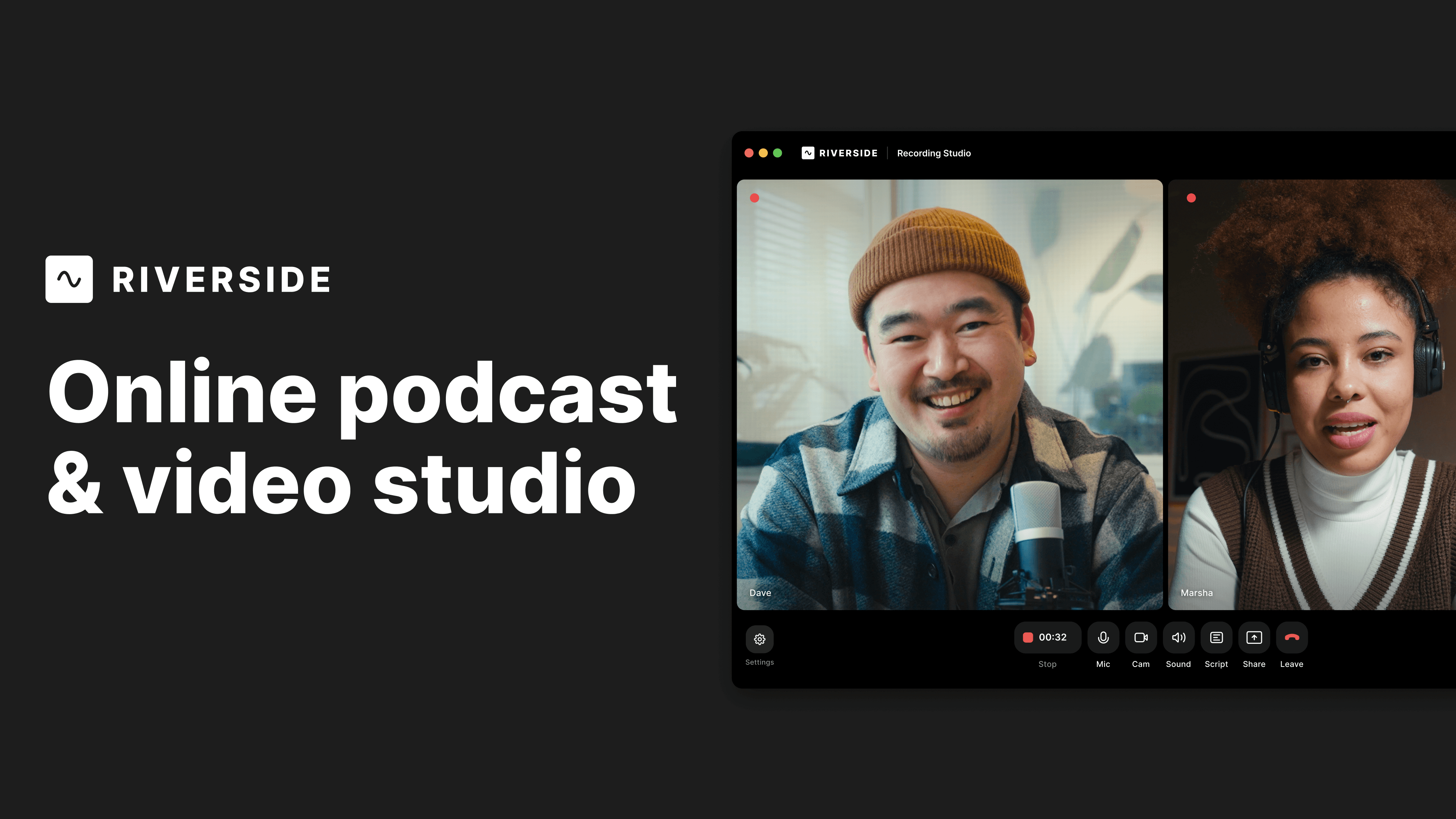
Riverside
RiversideRiverside

Remote podcasts, interviews, creator production, browser-based recording

Our Verdict

Who should choose Descript vs Riverside?

Choose Descript for podcast editing, transcript-led video editing, spoken content workflows. Choose Riverside for remote podcasts, interviews, creator production, browser-based recording.

Best forDescript for podcast editing, transcript-led video editing, spoken content workflows | Riverside for remote podcasts, interviews, creator production, browser-based recording
Not ideal forNot the best fit for cinematic generative video experimentation | Less relevant if you mainly need prompt-led AI generation
If you want podcast editing, transcript-led video editing, spoken content workflows -> choose Descript.

Descript is the better pick when that outcome matters more than breadth or familiarity.

If you want remote podcasts, interviews, creator production, browser-based recording -> choose Riverside.

Riverside is the stronger option when that goal matters more than Descript's main advantage.

Decision Summary

What matters most in Descript vs Riverside.

Use this section to scan the winner split, the main tradeoff, and the next useful click if neither option is clean enough.

Fast scan6 points
Main buyer mistake

The wrong move is forcing both products into the same job. This page only gets useful once the workflow split is clear.

If neither one fits

Pictory is the first nearby alternative to inspect when both finalists feel compromised.

Next comparison worth opening

Runway vs Synthesia is the next useful head-to-head if this decision opens up into a wider shortlist.

Lower-risk starting point

Descript comes in lower on starting price, so it is the safer first test when budget matters before deeper workflow differences do.

Weakest tradeoff to inspect

Descript looks most vulnerable on value, so that is the first metric to pressure-test before you treat it as the safer long-term fit.

At A Glance

See which one fits you better: Descript or Riverside.

Each card answers the same decision questions: what the tool is best for, where it is strongest, where to be careful, and when to pick it over the other option.

Descript
AI Video Editing Platform

Descript

Descript is positioned around transcript-based media editing, AI-assisted cleanup, and collaborative production for teams creating podcasts, clips, interviews, and video content.

Starting price$16/month
Best forPodcast editing, transcript-led video editing
Strongest edgeEditing workflow
Best uses
  • Transcript editing
  • Screen recording
  • Podcast production
  • Podcast editing, transcript-led video editing, spoken content workflows
Strengths
  • Strong transcript-first editing workflow
  • Useful for podcasts, interviews, and content repurposing
  • Collaboration fit is stronger than many creator-first tools
  • Better fit for podcast editing, transcript-led video editing, spoken content workflows
Watch outs
  • Not the best fit for cinematic generative video experimentation
  • Deeper production teams may still want dedicated timeline editors for final polish
  • Pressure-test value before choosing
  • Riverside has the clearer edge on output quality
Pro tip

Choose Descript when spoken-content editing and repurposing are the real jobs.

Riverside
AI Recording and Production Platform

Riverside

Riverside is positioned around high-quality browser recording, creator production, and AI-assisted editing for podcasts, interviews, and show-style content.

Starting price$24/month
Best forRemote podcasts, interviews
Strongest edgeOutput quality
Best uses
  • Remote recording
  • AI editing
  • Clips
  • Remote podcasts, interviews, creator production, browser-based recording
Strengths
  • Strong browser-based capture quality for interviews and podcasts
  • Good production fit for recurring content teams
  • Workflow is clearer for recording-first teams than many generative video tools
  • Better fit for remote podcasts, interviews, creator production, browser-based recording
Watch outs
  • Less relevant if you mainly need prompt-led AI generation
  • Business pricing requires a sales step
  • Pressure-test value before choosing
  • Descript has the clearer edge on editing workflow
Pro tip

Choose Riverside when recording quality and creator production are more important than generative novelty.

Quick Winners

The fastest way to decide what each option wins at.

These cards answer common comparison intent immediately: overall fit, ease of adoption, value, and which product makes more sense for team usage.

Best overall

85/100

Descript is the stronger default pick.

Descript has the better overall score blend, so it is the safer starting point when the buyer wants the strongest all-around fit rather than a narrow edge case.

Open Descript

Best for beginners

Starts at $16/month

Descript looks easier to adopt.

Descript reads as the friendlier choice when fast onboarding, lighter workflow friction, or broader mainstream usability matters more than maximum depth.

Open Descript

Best value

Starts at $16/month

Descript gives the stronger value signal.

Descript is the better value read when the buyer wants stronger return on spend instead of paying extra for strengths they may never use.

Open Descript

Best for teams

4 integrations

Descript is better positioned for team usage.

Descript looks stronger when shared workflows, collaboration, admin depth, or integration surface area matter more than solo-user simplicity.

Open Descript

Why trust this comparison

How Descript and Riverside are scored

Use the same scorecard to see where Descript wins, where Riverside wins, and which tradeoffs matter for your shortlist.

MethodologySee the framework
Same rubric on both sidesStructured evidence tablePricing and fit checks

Verdict by Use Case

Which option makes more sense depends on what the buyer is optimizing for.

These cards compress the recommendation layer before you drop into the detailed evidence.

Choose Descript

Recommendation

Descript is the better fit when workflow match comes first.

Podcast editing, transcript-led video editing, spoken content workflows. Its clearest case is when the buyer wants faster daily work, less friction, and strengths that keep paying off after the trial period.

Choose Riverside

Recommendation

Riverside makes more sense when its strengths match the main job to be done.

Remote podcasts, interviews, creator production, browser-based recording. It becomes the stronger recommendation when those advantages help the buyer move faster, produce better work, or justify the spend more clearly.

Quick read

Decision lens

Descript has the lower starting price.

The page compares normalized pricing, capabilities, metrics, and product-positioning data so the recommendation stays tied to concrete fit signals. The main pressure-test is Descript's value versus Riverside's value.

Structured Comparison

The underlying side-by-side evidence for Descript and Riverside.

This is the proof layer behind the summary cards above. Use it to verify pricing, platform coverage, integrations, and the exact feature differences.

Descript

Quick summary

$16/month

Descript is positioned around transcript-based media editing, AI-assisted cleanup, and collaborative production for teams creating podcasts, clips, interviews, and video content.

Pros
  • Strong transcript-first editing workflow
  • Useful for podcasts, interviews, and content repurposing
  • Collaboration fit is stronger than many creator-first tools
Cons
  • Not the best fit for cinematic generative video experimentation
  • Deeper production teams may still want dedicated timeline editors for final polish
  • Pressure-test value before choosing

Riverside

Quick summary

$24/month

Riverside is positioned around high-quality browser recording, creator production, and AI-assisted editing for podcasts, interviews, and show-style content.

Pros
  • Strong browser-based capture quality for interviews and podcasts
  • Good production fit for recurring content teams
  • Workflow is clearer for recording-first teams than many generative video tools
Cons
  • Less relevant if you mainly need prompt-led AI generation
  • Business pricing requires a sales step
  • Pressure-test value before choosing

Evidence Table

Feature-by-feature comparison

Descript
Riverside
#FeatureDescriptRiverside
1Overview
Best for
Podcast and transcript-led video editing
Remote recording and creator production
2
Starting price
$16/monthCurrent listed price
$24/monthCurrent listed price
3
Free plan
Included
Included
4Capabilities
Output types
Podcasts, clips, screen recordings, talking-head videos
Podcasts, interviews, webinars, clips
5
Editing workflow
Transcript-based editing with AI cleanup
Browser recording with AI editing and clipping
6
Collaboration
Shared projects and collaborative editing
Business workflows and shared production support
7
API access
Not a core selling point
Not a primary product message
8Production fit
Platforms
Web, Mac, Windows
Web, iOS, Android
9
Commercial usage
Business use supported on paid plans
10
Team plan
Business and Enterprise plans available
Business plan available

Alternatives

What to look at next if neither of these products is the right fit.

If neither product is the right fit, nearby options in the same category help the user keep exploring without leaving the comparison workflow.

Final Recommendation

The final choice between Descript and Riverside.

Choose the tool that makes the job feel easier every day. The better option depends on whether the buyer is optimizing for editing workflow, output quality, pricing leverage, ecosystem fit, or lower operational friction.

Choose this whenDescript
  • Choose Descript when editing workflow is the deciding factor and the workflow fits podcast editing, transcript-led video editing, spoken content workflows.
  • It is the stronger option when its core strengths matter every day instead of only in edge cases.
  • It makes the most sense when value is a manageable tradeoff rather than a hard blocker.
Choose this whenRiverside
  • Choose Riverside when output quality matters more and the workflow is closer to remote podcasts, interviews, creator production, browser-based recording.
  • It is the better fit when its main strengths solve the actual job to be done more directly.
  • It makes the most sense when value is acceptable compared with the upside elsewhere.
Bottom line

Descript is the better choice for buyers optimizing around editing workflow, while Riverside is the better choice for buyers optimizing around output quality. If the fit still looks close, use pricing, platform coverage, and the weakest metric on each side as the tie-breakers.

FAQ

Common questions people ask before choosing between Descript and Riverside.

These are the recurring buying questions behind most comparison intent: fit, strengths, pricing, tradeoffs, and which option makes more sense under different conditions.

What is the main difference between Descript and Riverside?

Choose Descript for podcast editing, transcript-led video editing, spoken content workflows. Choose Riverside for remote podcasts, interviews, creator production, browser-based recording. In structured terms, Descript stands out most on editing workflow, while Riverside stands out most on output quality. The clearest way to use this page is to decide which of those strengths actually affects the buyer's day-to-day workflow.

Which one is better for value and pricing?

Descript starts at $16/month, while Riverside starts at $24/month. Descript has the lower entry price, but the real decision should be based on what each plan unlocks, how usage scales, and whether the buyer would actually use the extra capabilities in the more expensive option.

Which product should most people choose?

There is usually no universal winner. Descript is the stronger fit for podcast editing, transcript-led video editing, spoken content workflows, while Riverside is the stronger fit for remote podcasts, interviews, creator production, browser-based recording. Most buyers should start with the product whose strengths line up more directly with their daily workflow, team shape, and non-negotiable requirements.

What tradeoffs matter most in this comparison?

The main tradeoffs are where each product is weakest relative to its strengths. For Descript, the key area to pressure-test is value. For Riverside, it is value. The detailed table is valuable because it shows whether those weaker areas are acceptable compromises or real reasons to rule one option out.

Trust signalHuman-reviewed editorial page

Reviewed by

specly team

Editorial research team

The specly team treats comparison pages as decision pages, not feature dumps. The goal is to expose where each product wins, where it falls short, and what to open next if neither one is right.

Specly team review
Head-to-head tradeoffs
Direct next-step links